Five Centuries After Luther, Is the Priesthood of All Believers Still Just a Doctrine?
On October 31, 1517, a German monk named Martin Luther posted ninety-five theses on the door of the Castle Church in Wittenberg. He meant to start a debate. Instead, he started a Reformation.
Three years later, he wrote something even more radical. “Whoever comes out of the water of baptism can boast that he is already a consecrated priest, bishop, and pope.” Every baptized believer, he argued, is a priest.
Then, in the very same breath, he added another statement. It was not fitting, he said, for just anybody to exercise that office.
Five centuries later, we're still living inside that sentence and its accompanying statement.
A Doctrine We Affirm
Most of us would sign our names to affirm the priesthood of all believers. With little hesitation. It's in our statements of faith. It shows up in sermons. Peter wrote it plainly: “You are a chosen people, a royal priesthood” (1 Pet. 2:9). John echoed it: Jesus “has made us to be a kingdom and priests to serve His God and Father” (Rev. 1:6).
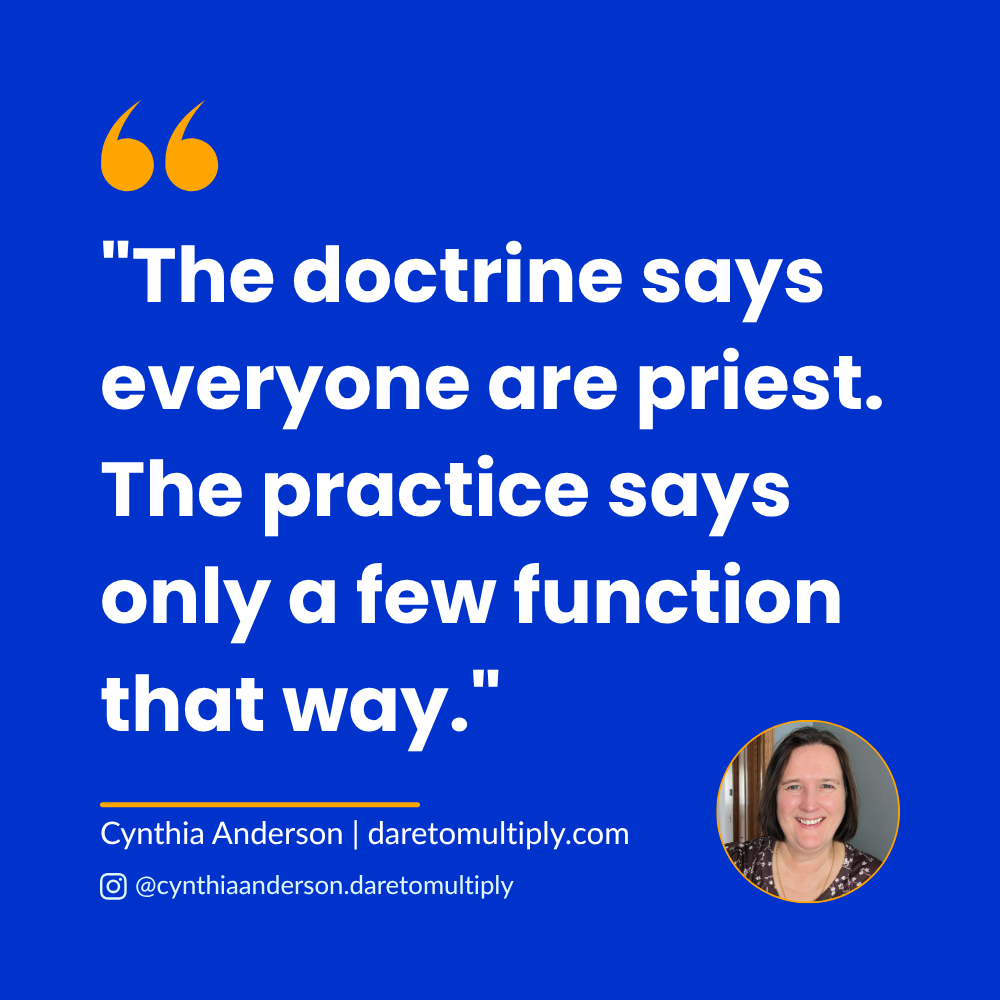
But ask a different question and the picture changes. Who baptizes in your context? Who serves communion? Who leads when there's a crisis? Who is trusted to start something new? For most of us, the honest answer is a small circle of theologically trained, recognized leaders. The doctrine says, everyone. The practice says a few.
That's Luther's caveat statement, still at work.
A Doctrine Movements Live Out
This is one place where global movements have quietly been ahead of the rest of us in the West. In many Disciple Making Movements, the person who leads a friend to faith is the one who baptizes them, often within days. Ordinary believers facilitate Bible studies in their homes. Women lead groups, and sometimes whole networks of groups. A new believer is a functional royal priest from the day they come up out of the water, exactly as Luther wrote so many years ago.
For them, the priesthood of all believers isn't a doctrine to affirm. It's simply how they live out their faith.
What about context, you might be asking. That is fair. The conditions that accelerate movements in places like South Asia or East Africa aren't identical to the conditions in a Western suburb, and we shouldn't pretend they are. But this truth isn't a method that needs the right soil. It's a biblical identity, and it is universal. Like Dave Ferguson, of Exponential, whom I recently interviewed on the Dare to Multiply podcast, I believe we need to release many new expressions of church, led by all kinds of people. This is vital in moving from addition growth into multiplication and movement.
Taking It Seriously
All month we've been circling this question. We've looked at the messages that tell ordinary believers they aren't qualified and the pathways that make them wait. Reformation Day (whether your tradition celebrates it or not) invites one more step: to stop treating the priesthood of all believers as heritage and start treating it as practice.
What might that look like this year? Maybe a small group member baptizes the neighbor she led to Jesus, and they celebrate the Lord’s Supper in the home where they gather. The ordained pastor blesses and champions this. Perhaps a woman who has been quietly discipling three families is finally recognized and released to facilitate a new group with them. Maybe the next time someone needs prayer, you invite the person sitting beside them to pray instead of taking the lead.
Luther paid a great price to open the door for a return to the priesthood of all. Five hundred years on, it's still up to us whether we walk through it.

If you're ready to wrestle with what it looks like to release every believer as a royal priest, and you'd like good company along the way, come find us at multipliersmindset.com/dtmmembership.
Something to Think About and Discuss:
Where does your context affirm the priesthood of all believers in doctrine but limit it in practice?
What resonated with you most in this article?
What is one way you could release an ordinary believer this month to do something usually reserved for leaders?
Share in the comments below or on our Dare to Multiply community.