
Why Your Discipleship Pathway May Be Blocking Multiplication
Imagine a man in your community comes to faith in January. He is thrilled. His wife, his brother, and half the guys he works with have noticed something is different about him.
What happens next? In many contexts, he's welcomed into a discipleship pathway. A newcomers' class. Then a baptism class. A membership class. A foundations course. Eventually a small group and, one day, if he stays faithful, a leadership track.
Now imagine it's eighteen months later. He has finished the steps and is finally ready to lead. But his brother and his coworkers? That window to share with them has quietly closed. Most of the people who noticed the change in him back in January have drifted out of his daily life. His friends are now mostly church friends.
He did everything we asked. The problem is…we asked him to wait 'til he was more mature to share his faith. Oh, we never said those words out loud. But our pathway said it loud and clear.
Mature First, Then Minister?
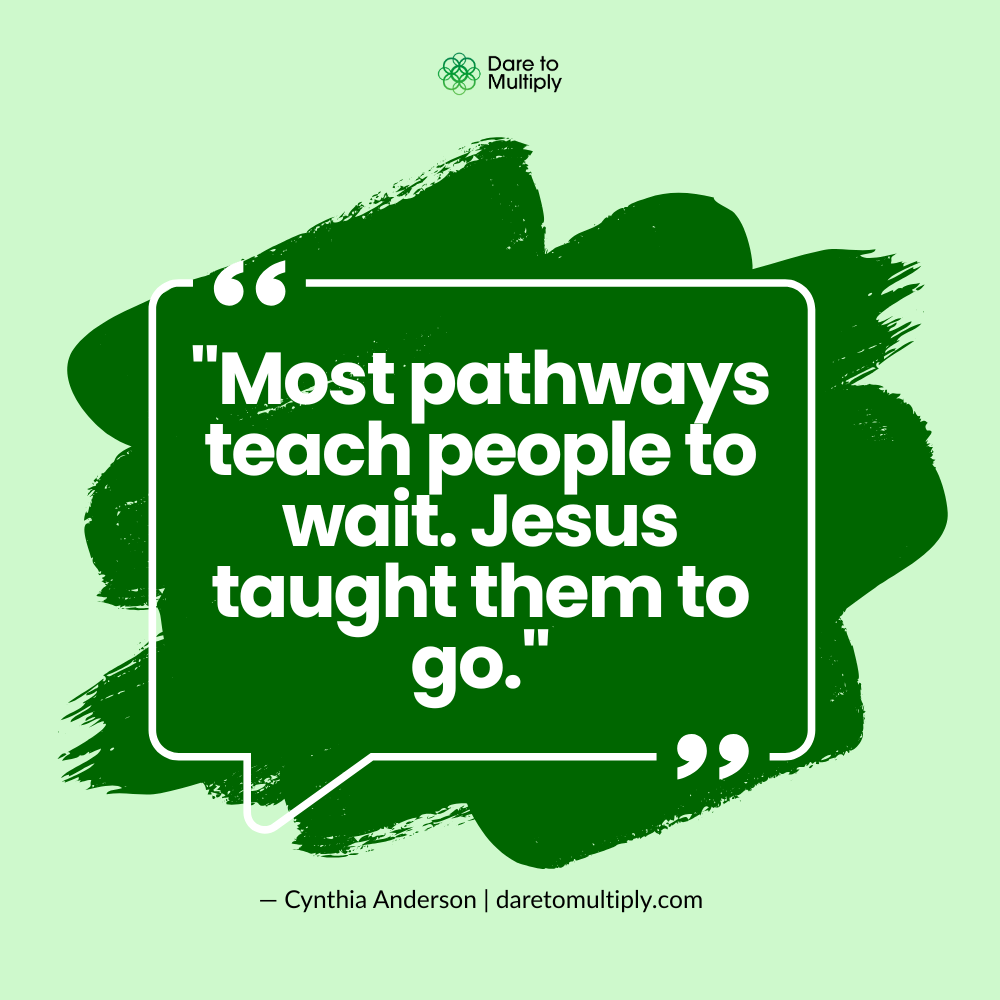
Most discipleship pathways are built with real care by people who love Jesus. I don't want to critique them lightly. I do want to shine some light on something many who have designed them don’t realize. Many of these pathways share a hidden assumption: you mature first, then you minister to others. Learn and mature, and then you can pass it on to others.
As I study the Gospels, I see that Jesus didn't seem to work that way. After He set free the man possessed by demons in the region of the Gerasenes, the man begged to come with Him. Jesus said no. “Go home to your own people and tell them how much the Lord has done for you” (Mark 5:19). No class. No waiting period. The man went and began telling the whole city of Decapolis.
The Samaritan woman had one conversation with Jesus at a well and went straight back into her town. “Many of the Samaritans from that town believed in Him because of the woman's testimony” (John 4:39). She did not have her theology sorted out. This woman had no idea what the word sanctification or justification meant. What she had was a powerful encounter with Jesus and a village full of people she knew.
Learning and Sharing Together
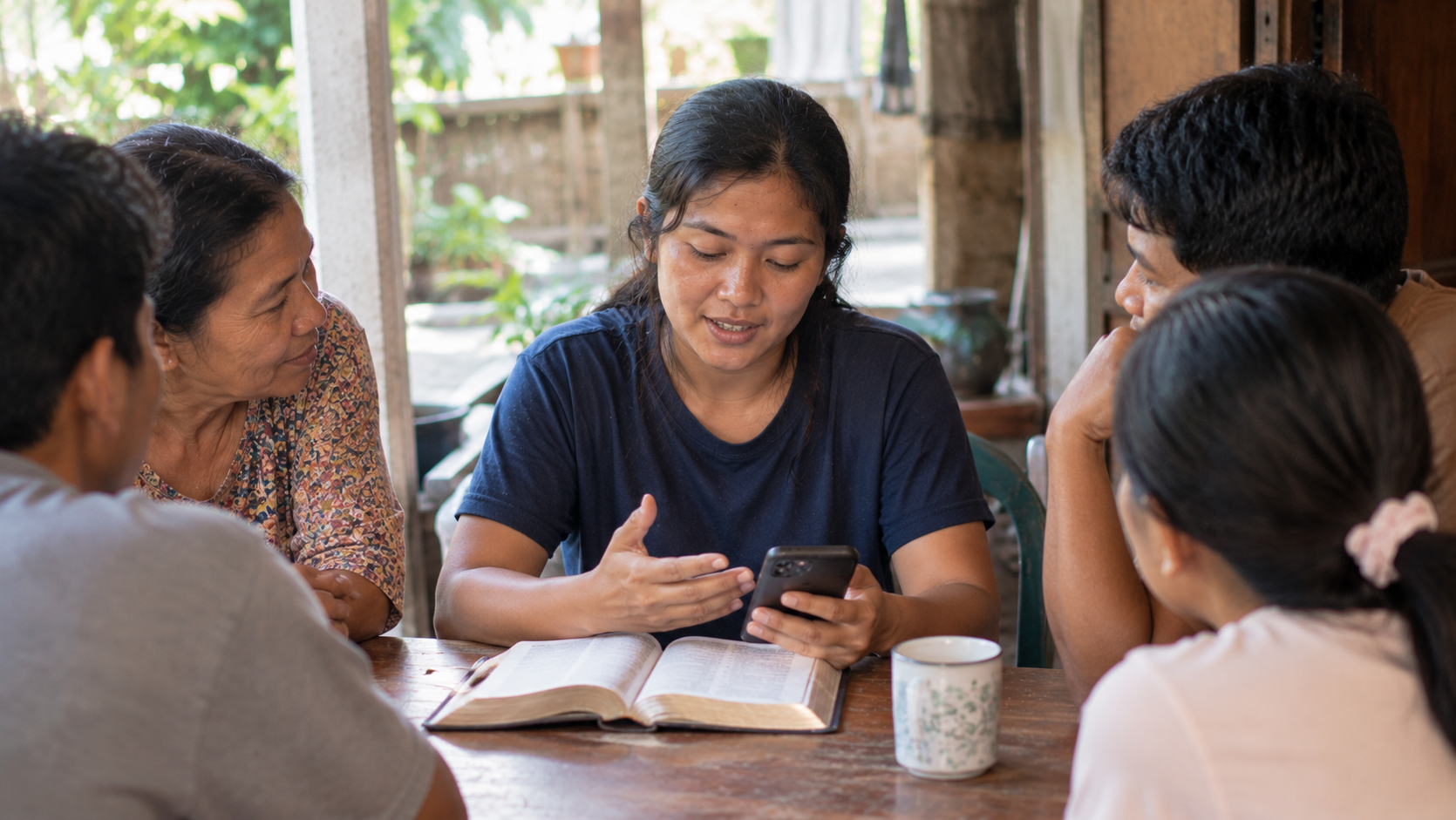
In the Discovery Bible Studies used in movements, one question shows up from the very first week: Who will you share this with? A brand-new believer, or even someone who doesn't even fully believe yet, is expected to pass on what they just learned to someone in their own circle…that very week. Learning and sharing happen together. Maturity grows through obedience, not before it.
Practitioners abroad face their own version of the pathway problem. Work often slows when local leaders are required to finish a certificate or Bible school program before they can lead a group, even when they're already ready. Or they are sent away for training, outside their context.
For those serving immigrant and refugee families in the West, the window may be even shorter. First-generation families are often tightly connected, and the first weeks after someone meets Jesus may be the moment their whole household is most open.
Let me be clear. Teaching matters. Sound doctrine matters. Loving correction matters. And the soil in a Western suburb is different from the soil in South Asia, so I won't pretend the same conditions apply everywhere. But none of that requires us to keep people on the sidelines while they learn.
Three Questions for Your Discipleship Pathway
Whether you lead a discipleship program in a congregation or a training process in a movement, here are three honest questions to ask this week:
How long after someone meets Jesus are they first encouraged to share what they're learning with someone else?
What does a person have to complete before they can facilitate a simple group on their own?
Is our pathway producing people who are doing ministry, or people who are preparing to?
Your answers may encourage you. They may give you pause. Either way, they will tell you whether your pathway is built for addition or for multiplication.
Rethinking a pathway isn't a one-afternoon project. If you'd like to work it through alongside other leaders asking the same questions, come find us in the membership community: multipliersmindset.com/dtmmembership.
Something to Think About and Discuss:
If a new believer entered your pathway today, how long would it be before they were sharing their faith or leading anything?
What resonated with you most in this article?
What is one step in your pathway you could open up so new believers can start obeying and sharing right away?
Share in the comments below or on our Dare to Multiply community.