
What the Persecuted Church Teaches the Rest of the World About Discipleship
Around this time each year, many believers set aside a day to pray for those who follow Jesus at great cost — the parts of the global family who gather at genuine risk, who lose jobs, homes, freedom, and sometimes their lives for their faith.
It is right that we pray for them. But I have deeply realized in the last number of years how much we also need to learn from them. I’ve had the privilege of training and befriending many who have lost family members to martyrdom. They’ve raised up leaders only to have them killed. These believers who follow Jesus under this kind of tremendous pressure understand things about discipleship that the rest of us, in more comfortable settings, have often forgotten.
They Expect Discipleship to Cost Something
In much of the comfortable Western world, we have quietly built a version of discipleship that asks little. Attend, give, serve occasionally, grow at your own pace. The cost is minimal, and so, often, is the fruit.
Believers under severe persecution do not have this option. For them, saying yes to Jesus may cost them everything from the very first day. And here is what is striking: this does not slow their multiplication. It accelerates it. When following Jesus is known to be costly, the people who follow are serious, and serious disciples make other disciples.
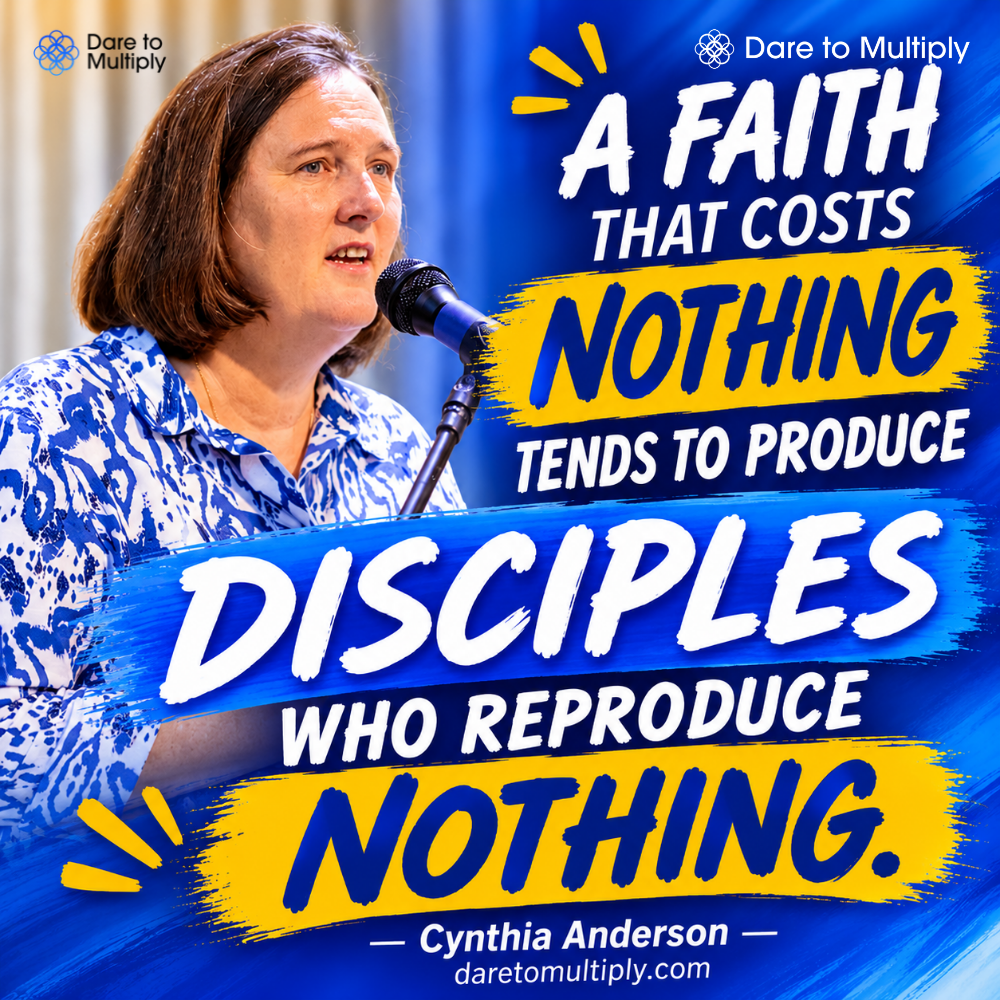
This is not an argument for manufacturing hardship. It is an invitation to stop removing every cost from discipleship in the name of making it accessible. A faith that costs nothing tends to produce disciples who reproduce nothing.
Our temptation to lower the costs of following Christ exists not only in the West. In Asia, we see it as well, and in Africa, prosperity doctrines run rampant. But those who live in the most difficult of places to reach, continue to speak to us no matter where we are.
They Rely on the Simple and Reproducible
Where faith is under pressure, there are usually no large buildings, no professional staff, no elaborate programs. What they have instead is Scripture (often just an audio Bible shared among several villages), prayer, obedience, and ordinary believers passing on the simple stories of faith they have received. And, of course, the testimony of transformed lives. Nothing can remove that from them.
In other words, persecution strips discipleship down to exactly what makes it reproducible. House gatherings. Simple Bible discovery. Obedience-based discipleship. Every believer is expected to disciple others because there is no one else to do it. The very conditions that look like disadvantages turn out to be the conditions in which Disciple Making Movements have most often exploded.
I think often of a believer I work closely with in West Africa, in a context where gathering openly is not possible. A place where every day hundreds are coming to Christ, at the very same time as they are experiencing death threats and having to pull new believers out of their villages before they are killed by family members. My friends listen carefully to the Holy Spirit, as He warns them in dreams to move from one place to another, just before an attack comes.
Their discipleship uses only the essentials — and those basic, simple things are multiplying faster than anything I have ever seen in settings where many more resources are available. Their simplicity is not a limitation. It is part of what is causing growth.
They Hold It All With Open Hands
Perhaps the deepest lesson is one of posture. Believers who may lose everything learn to hold things loosely — their plans, their security, their very lives. And that open-handedness is exactly the posture that radical disciple-making requires.
It is hard to release people to go and multiply when you are gripping tightly to control, comfort, and predictability. The believer in areas of deep persecution has already let go of those things. What looks like loss has freed them for a kind of fruitfulness that those of us holding tightly to our comforts often miss. It’s given them a faith and a confidence that the Almighty God is with them, a belief that prayer is real and that it works, and a deep dependence on the Holy Spirit. One that we often fail to understand or seek.
So as we pray for them — and we should — let us also be reflective as students. They are not only objects of our compassion. In many ways, they are our teachers. And the lessons they offer about costly, simple, open-handed, deeply devoted discipleship are exactly the ones those in more comfortable parts of the world most need to hear.

If you want to keep learning from the global family and applying it in your own context, we’d love to have you in the conversation. Find out more at multipliersmindset.com/dtmmembership.
Something to Think About and Discuss:
• In what ways might comfort have quietly lowered the cost — and the fruit — of discipleship in your context?
• What resonated with you most in this article?
• What is one thing the persecuted church models that you could intentionally practice this month?
Share in the comments below or on our Dare to Multiply community.